Retaining Wall Prep Done Right at Lake Oconee
Most people think about what a retaining wall looks like when it's done. We think about everything that has to happen before the first block ever goes in. That prep work - locating spot drains, mapping irrigation lines, making sure the excavation starts clean - is what separates a wall that holds up for decades from one that causes problems down the road.
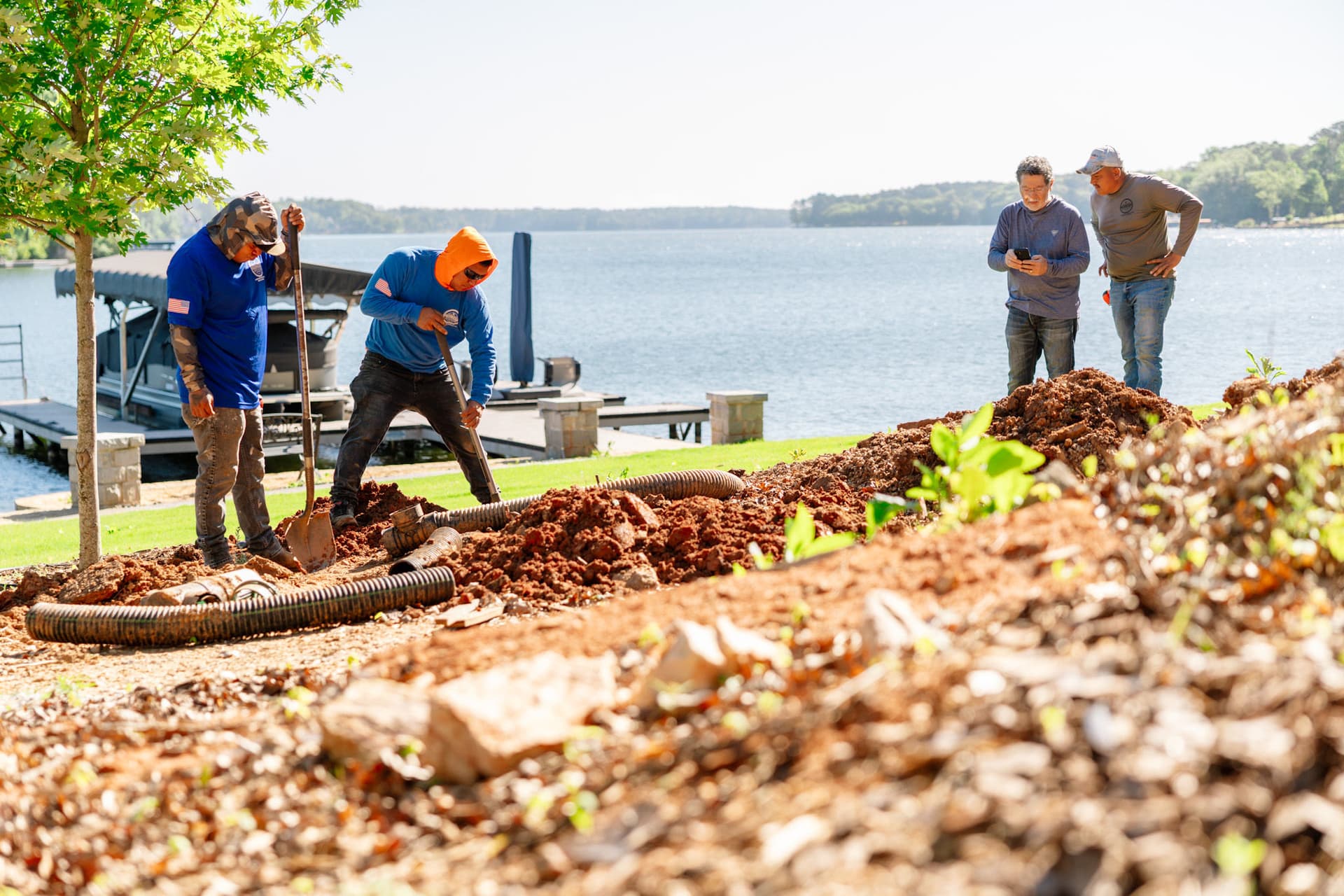
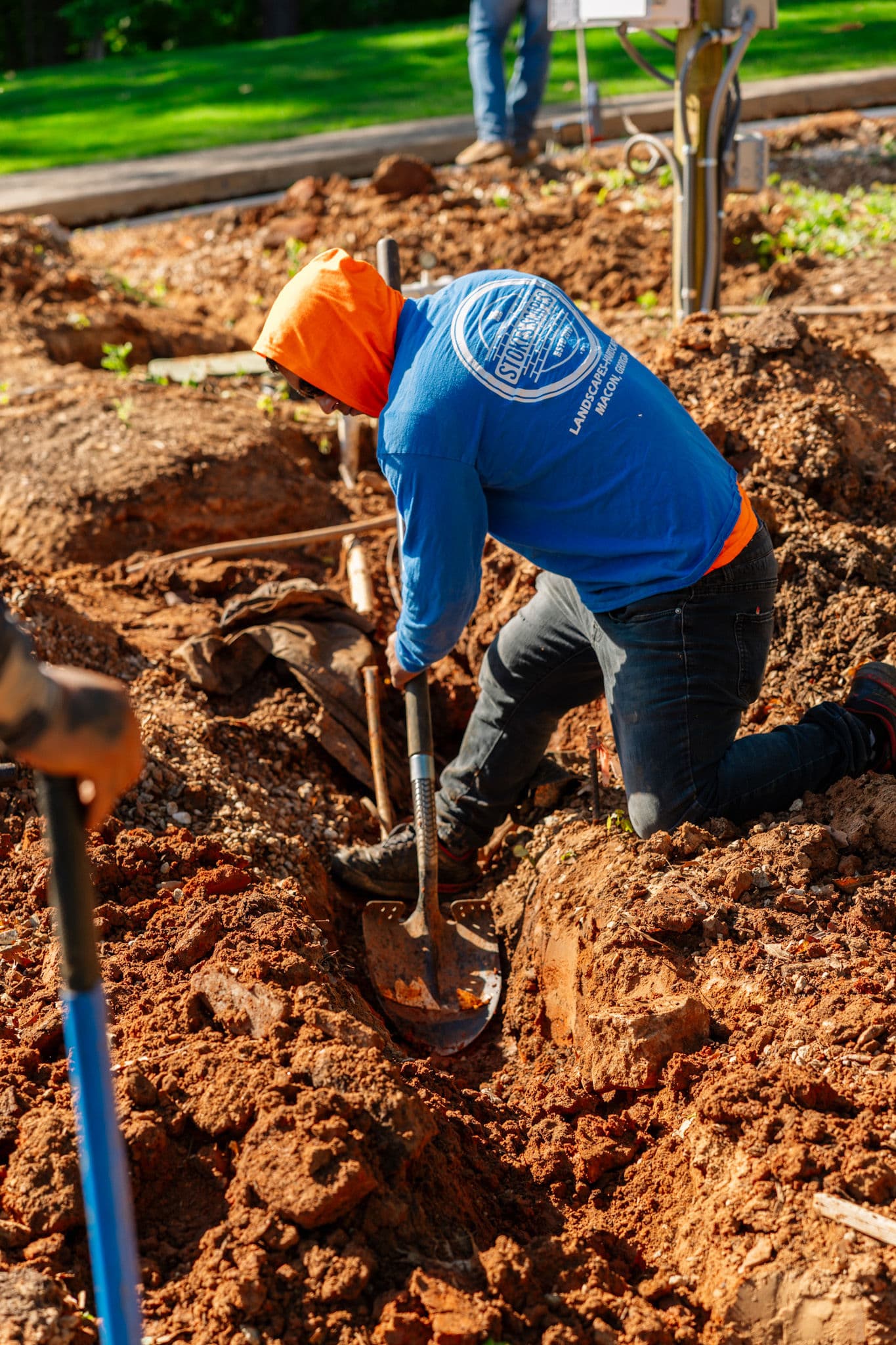
Here's what we were working with on this Lake Oconee property. Before breaking ground, we took the time to locate and flag existing drainage and irrigation so nothing gets cut, crushed, or compromised during excavation. It sounds like a small thing. It isn't. Hitting an irrigation line mid-dig or burying a drain inlet under a new wall creates headaches that are expensive to fix and completely avoidable.
The drainage piece matters especially on lakefront properties. Water has to move somewhere, and if your retaining wall isn't built around a solid drainage plan, you'll eventually deal with hydrostatic pressure, erosion behind the wall, or pooling where you don't want it. Getting that figured out before the excavation starts - not after - keeps the whole job on track.
We take a hands-on approach at every stage, which is why you'll see our crew and our team leads working side by side on the ground. Everyone needs to understand what's buried, where it goes, and how the finished drainage solution needs to function. That kind of coordination at the start is what makes the finished product actually work the way it should.
If you're planning a retaining wall and the conversation hasn't started with drainage and irrigation - it probably should. That groundwork is the difference between a wall that looks good and a wall that performs.